
Adding Attachment Points to your Inflatable Touring Board

Norm Hann • September 11, 2022
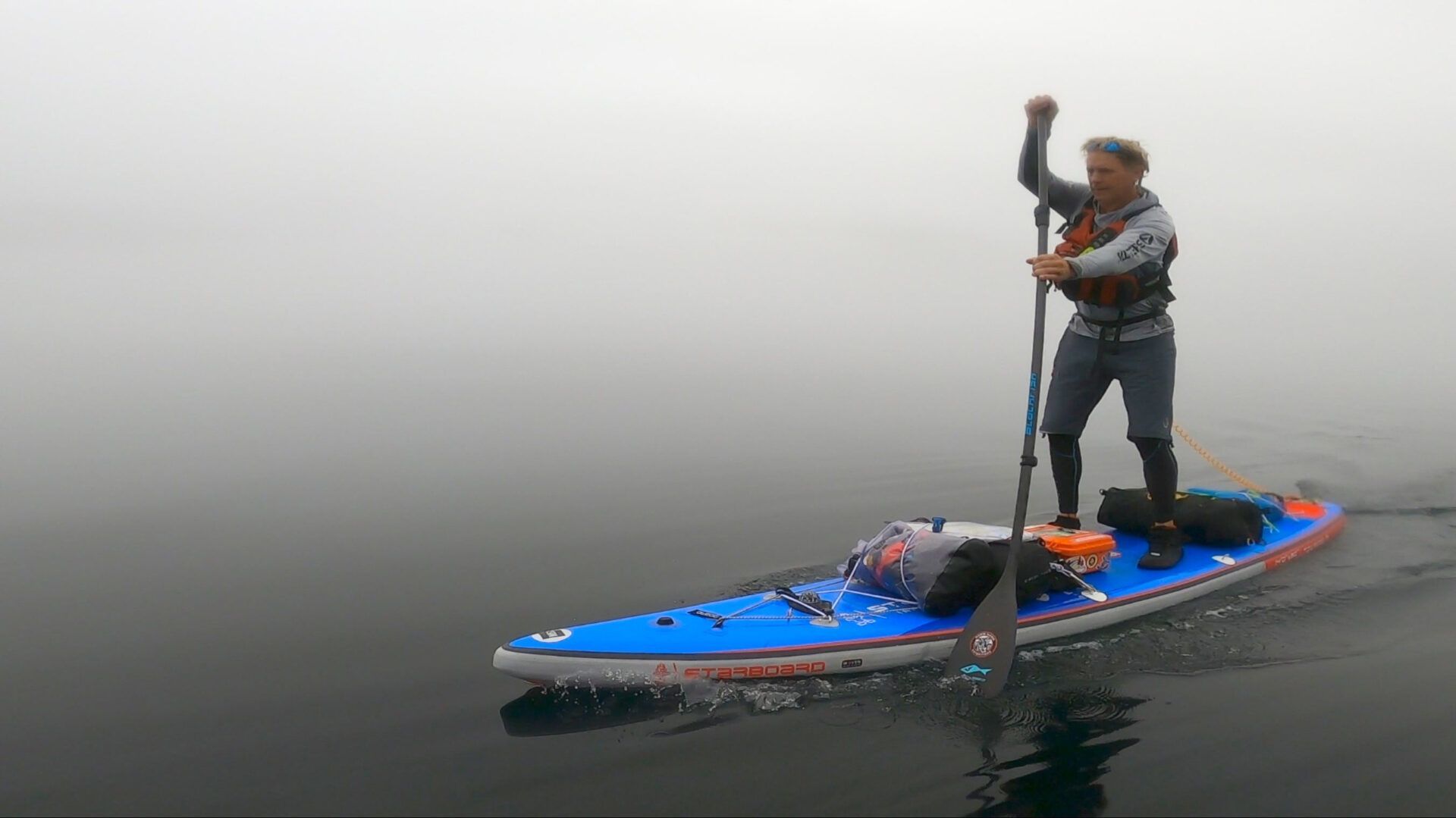
Person standing on a blue paddleboard in calm foggy water, paddling with a pole

Big thanks to my paddling partner Bruce Kirkby who has added a number of D rings to his Starboard Touring Inflatables and thought this article would be useful if you are looking to add rear or additional attachment point to your boards.

From Bruce:

" I've added attachments to 4 boards now, and have learned a fair bit in the process. Good news is even in rough conditions, not a single one has ever failed. Here are a few pics and details.

I use 1″ NRS d-rings ( https://www.nrs.com/star-ik-1-d-ring-pvc-patch/pr87 ) attached with Stabond adhesive ( https://www.nrs.com/stabond-adhesive/pkjz ) Stabond is a 2-part contact cement, and it is crucial–the strongest PVC adhesive on the market I believe. I've seen lots of other glues marketed as 'strong' rip off when tightening bungees on the beach.

One other alternative, if you really want to avoid the glue, are these sticky patches from NSI ( https://www.northshoreinc.com/store/pc/viewPrd.asp?idproduct=344&idcategory=0 ) They should have an option for inflatable (vs hardboard). The NSI attachments seem strong, but would be second choice IMO to gluing down a d-ring. I also worry about the rope attachment (vs metal on d-ring) being abraded and weakening over time as bungee is pulled back and forth through it. But this is a quick and easy way to add lash down points, especially good I think on a hardboard.

You'll need to clean any deck pad from the area you are gluing…and taking a knife and sand paper to a perfectly good inflatable board can be intimidating at first. Don't stress! It's not hard. To begin I position the d-rings where I want them, then trace the outline of the each patch onto traction pad using a sharpie. After that, I use a sharp knife to carefully scrib edge, being certain I'm not cutting into the board itself (this is actually easier than it sounds as the traction pad is essentially foam, while the board is hard rubber, so you can cut through the foam pretty easily without nicking the board). Next, I try to peel as much pad off as I can by hand, using the knife to pry underneath as I go. I scrap away any big bits left behind with the knife, then sand what remains until I'm confident I'm down to PVC rubber. It will never be 100% clean – just do the best you can. Then pick a warm but not baking hot day to apply the stabond + rings. It works best around 70 F and medium humidity (if you want to geek out!) There are detailed application instructions that come with Stabond."

Share this article

Recent Posts

Calm blue lake with mangroves, distant mountains, and a bright sky reflecting on the water
By Norm Hann June 16, 2026
Gabby & Laird Hamilton discuss the BP oil spill's impact on marine life. Learn about eco-friendly practices in adventure travel.
Podcast promo for “The Great Bear Rainforest with Norm Hann,” featuring two speaker portraits on a pink background.
By Norm Hann January 7, 2026
Join Norm Hann as he shares his journey from teaching to guiding in the Great Bear Rainforest. Contact us to plan your adventure!
Surfer riding a blue wave near a rocky coastline at sunset
By Norm Hann October 5, 2025
Experience paddle surfing in the Maldives this May. Enjoy fewer crowds & optimal conditions. Contact us to plan your adventure!

Show More